Salem Village – Book 1
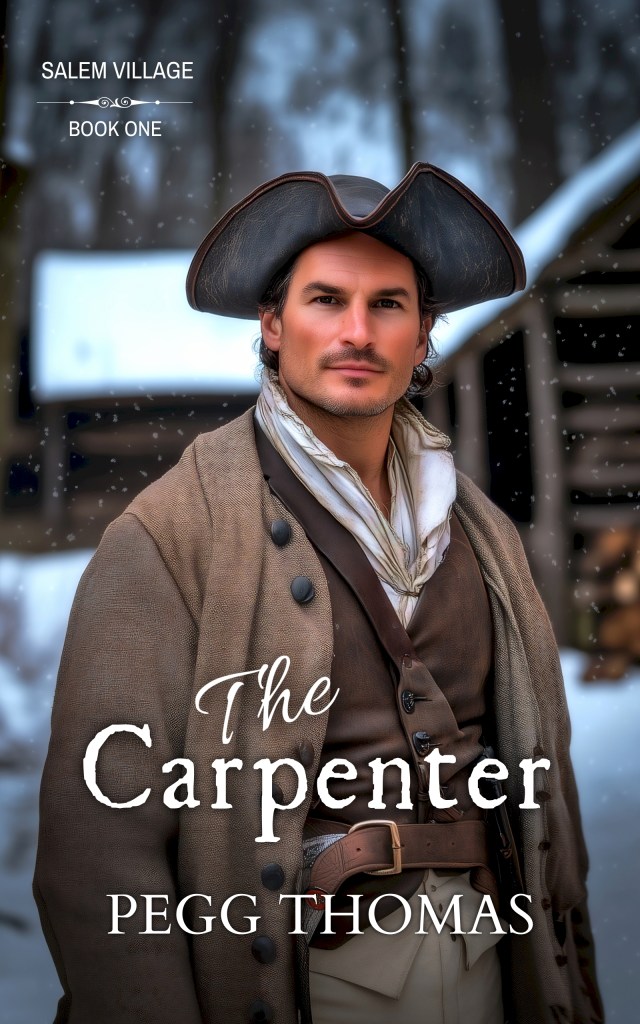
Whispers of Witchcraft in Salem Village: A Tale of Fear and Love
Caleb Buffum, a Quaker, never expected to take in a young Puritan girl as his own. But he and his wife felt led to give the orphan girl a stable home. However, as the word “witch” spreads through Salem Village, Caleb’s past experiences with Puritans leave him fearing for his family’s safety. He knows all too well the rage they can unleash on Quakers with even the slightest provocation. What if the girl he has grown to care for could bring disaster upon them all?
A retired Puritan physician, Dr. William Griggs had hoped to spend his remaining years in peaceful seclusion in Salem Village. But when he and his family arrive, they are immediately thrown into the midst of a baffling and disturbing situation. As he struggles to understand the strange fits plaguing the Puritan young women, the Quakers living on the outskirts of the village are unaffected, and he wonders how that can be.
As the Quakers struggle to distance themselves from the madness, questions remain. Will they be able to escape the fate of the accused? Will their distance be enough to protect them if the village erupts into a frenzy of witch-hunting? Or will they fall victim to the Puritan’s unfounded fears?
Tropes: Crisis of Faith – Unlikely Allies – Quakers – Cost of Conviction – Hidden Secrets – Faith vs Culture – Hard Choices – Salem Witch Trials
Chapter 1
January 15, 1692
Had their idyllic time near Salem Village come to an end? Caleb hunched over the headboard of a baby’s cradle he’d been commissioned to make for a Puritan goodwife who lived south of the village. He blew a thin curl of wood from the end of his carving chisel and glanced out the window. Someone approached with her head down, either his wife or his eldest daughter, bundled against the cold, making it impossible to tell which one it was.
The main door to the barn banged shut, and then the inside door leading into the carpentry shop opened.
Hannah Jr. entered the workshop and untied the knitted wool scarf that had covered her head, draping it over her shoulders to expose her dark blond hair, which was covered by a linen cap. “I hope I am not disturbing thee, Father.” Snow lingered on the tops of her boots and clung to the hem of her wool petticoats. She approached the brazier in the middle of the carpenter shop and held her hands out to its warmth.
“Thee are never a disturbance.” Caleb set his chisel aside and dusted off his hands. “What brings thee out in this cold?”
“I am just returned from the village.” And by her tone, something hadn’t gone well.
Of all his children, Hannah Jr. was the steadiest, the least likely to be worried over the strange goings-on among the Puritans there. “What happened that brings thee out to see me?”
“‘Tis more of a feeling than a happening.” She picked at a loose thread on her heavy cape. “While many of those in the village are standoffish to me, today was different.” Blue eyes so like her mother’s met his. “They scurried along the street without greetings even for each other and kept their faces down.”
“Tis cold even for January. Perhaps ’twas the wind that hurried them along without greetings.” Yet her words struck hard on the tail of his own thoughts.
“I think not just the wind.” She spread her hands out, palms up. “On my deliveries, there were no happy greetings. I was handed the coins, the goodwives took their cheese and butter, and then closed the door without a parting word.” She glanced out the window. “Except for the Buffingtons, of course. Sarah is always kind, as are all her children.” Hannah Jr.’s cheeks grew rosy, whether from the brazier’s heat or her reaction to those of the village, Caleb couldn’t be sure.
Even the goodwives, her loyal clients, had responded as such? That was unusual. At least, it was unusual for Salem Village. In other places, it was common practice. If a Puritan would purchase anything from one of the Friends—those whom they called Quakers—it was grudgingly and with an air of contempt meant to put them in their place.
Caleb remembered that feeling all too well, having faced it too many times. Were they to face it again? Here in the village where they’d made their home for the past twelve years?
“I know Thomas Buffington warned thee of something happening in the village, but I did not expect to feel so…” Hannah Jr. let her words fall off in a shrug.
The brewer, Thomas, to whom their son, Robert, had been apprenticed, had arrived the week prior with both Robert and the warning. There was something brewing in the village other than his ales, small beers, and ciders. Two of the village girls had fallen into some sort of fits on several occasions, and the cause was as yet unknown. Thomas felt that it would be better for Robert to remain on the farm until whatever it was had passed.
“I was very uncomfortable, Father.”
“Thee are wise to be uncomfortable when confronted in such a manner.”
Hannah Jr. didn’t know of their history. She’d been far too young to remember their escape when he and Hannah had run from a mob of Puritans. Perhaps it was time to tell her. He didn’t relish the idea, didn’t want to rehash what had happened. But he certainly didn’t want Hannah to have to tell their daughter of those dark days. His wife had suffered enough because of it. Caleb pulled the two stools he kept in the shop close to the brazier. “Have a seat. I believe ’tis time to tell thee about what happened before.”
“Before?” She loosened her cloak and perched on one of the stools, but Caleb paced behind the other one.
“‘Twas a long time ago, and thee had just turned a year old a month before. Your mother and I lived outside of a little village not unlike Salem Village in size and population, with farms surrounding it. The Friends community there was smaller and the Puritans tolerated us even less. In fact, they were openly hostile on many occasions.” He rubbed a hand down his face, seeing the past among the tidy rows of tools lining the back wall of the shop. “A sickness came about in late January of that year, and many people died. Too many. The very young and the very old were hardest hit, of course. We heard of it in our Friends community outside the village, yet none of our people succumbed to the illness.”
“How terrible that must have been for the poor village people.”
He startled at his daughter’s voice. Brought back to the moment, he sat on the stool and took her hand in his. “The Puritans came to believe that the sickness must have been caused by sin, and who better to blame the sin on than we Friends?”
Her cool fingers wrapped around his, her expression filled with empathy.
“The farm closest to the village was that of my best friend. He and his wife had married only months before. He had a nice little flock of sheep and was excited to plant a cabbage crop in the spring. But that never happened.” Caleb stopped and searched the trusting depths of his daughter’s eyes, wishing he could spare her from the rest. They’d raised their children to be strong and capable, unafraid to try new things and test their ideas as long as they fell within the bounds of the scriptures. He and Hannah hadn’t wanted them to grow up under a cloud of fear.
But this one, their eldest, was an adult. Of all of them, she could handle the truth. And it was best coming from him. He should prepare Hannah Jr. in case they were forced to run again. With such a large family, they would need the older children to help with the younger ones.
“What happened, Father?” Concern lined her lovely forehead. If only the world didn’t have such darkness in it. If only it could be as it should have been. But if onlys were not the world they lived in.
“The Puritans of the village—I know not who or how many—decided that the sin and sickness started among we Friends. Their proof was that none of us had died.” He shook his head. “Very few of the Friends had fallen ill at all that winter, and none with the same symptoms as were reported in the village.”
“Then how came they to accuse the Friends?” she asked. “That makes no sense.”
“As thee know, there has long been hatred from the Puritans toward the Friends.” He raised a hand to forestall the comment forming on her lips. “There have also been Friends who have acted to antagonize the Puritans and deepen the resentment they harbor toward us and our differing views of the scriptures.” Nothing in life was completely one-sided. Hannah Jr. needed to understand that as well. Even if, at the time of their escape, it had been.
“But to make such a hateful accusation…”
“In their hatred and fear, having convinced themselves that the illness was our fault, they descended on my friend’s house and burned it to the ground.”
Hannah Jr. pressed her hand over her mouth, her eyes glimmering with a sheen of tears.
Turning his face away from her, he drew in a steadying breath. Even after all the years, the pain remained sharp. Should he tell her the rest? Would it prepare her for what might come? Or would it frighten her unnecessarily?
Give me wisdom, Lord.
He waited until he felt that familiar nudge in his spirit. Then he met her eyes again. “My friend and his wife had been locked inside.”
Her gasp knifed through his chest, driving the memory deeper.
“It was just coming on dark when we saw the flames. Several of us from neighboring farms rushed to help, only to be shot at and driven away by the Puritans. Two of the Friends fell to the bullets, I learned much later. I was able to make it back to thy mother with nothing more than a bullet hole in the tail of my coat, but we could not stay. Another house was lighting up the sky by the time I arrived home.” The fear from that moment still burned deep within him. Fear for his wife and child. Fear that he wouldn’t be able to save them.
“I turned the cows out and saddled our horse for ’twas safer to ride through the forest than try to escape on the roads. Thy mother packed what she could carry, some food and what was needed for thee. Thee were wrapped in a blanket and rode with thy mother while I led the horse away. We could hear the raised cry of the Puritans coming after us.” The pictures in his head were so vivid that sweat broke out on his back despite the chill of the shop. “There was no snow on the ground that year, thank the Lord, and they could not track us in the dark.”
“Surely the Puritans knew thee would not fight back.” Hannah’s voice was strained. “How could they attack thee in such a way, with fire and muskets?”
“They were crazed by the loss of their loved ones, I assume. Perhaps chased by the very devil they so fear.”
Hannah clung to his hand. “But thee made it safely away.”
They almost had. He couldn’t tell her the rest. He’d told her all she needed to know. Enough to understand what had befallen them and what could befall them again if things in the village turned bad.
“We had lost everything but what we carried and the horse. His name was Samson, and he was black. Funny how I remember that, but it probably helped us escape into the darkness. He was a good horse. I was forced to sell him when we arrived at Salem Town for enough money to pay rent and purchase food. I found employment with a carpenter there. We saved until we could purchase this farm.”
“I remember the tiny log cabin in Salem Town. The door rattled in the wind.”
“Aye, and it seemed I had to patch the roof every other week to keep ahead of the leaks.” He’d worked night and day and saved every penny to move them out of that cabin. Hannah had skimped on even necessities to help. Caleb Jr. and Robert had been born there, but Caleb had been able to move the family to the farm before Tamson arrived, by less than a month if he remembered correctly. During the last twelve years, they’d built a successful farm and carpentry business and been blessed with two more boys. And lately, another girl, although she’d arrived as an eight-year-old, and not a babe, an orphan in need of a family.
A Puritan orphan.
Would the decision to take her into their home turn into something their family would suffer for? Would the village Puritans misinterpret their motives—added to their fear of whatever illness was upon the village—as reasons to drive them out? Or burn them down?
***
“I am sorry, Rachel.” William Griggs hung his coat on its peg by the door and turned to his wife of nearly fifty years. “There is nothing I can do. You are her closest kin. She has no other relations who can or would take her in.” With their past birthdays, Rachel had turned seventy and William seventy-four. And yet, they were raising her seventeen-year-old great-niece, Elizabeth Hubbard.
William had more than earned his retirement after a lifetime of doctoring. His joints ached, and getting out of bed in the wee hours to attend to the ill had become burdensome. There was also the nagging pain in his chest at times, the pain he kept hidden from Rachel. He couldn’t do much about that anyway. Time had taught him that some ailments were meant to be endured for the long haul, not cured.
When he’d visited quaint little Salem Village in the fall, he’d fallen in love with the beautiful countryside and easy pace of life there. So different from the constant noise and interruptions of Boston. The perfect place for a Puritan couple like themselves to retire. He looked forward to relocating, settling into village life, and enjoying his waning years.
Although he’d tried to retire the previous spring, his patients had refused to allow it. Hezekiah Pond, his apprentice for more than three years and a young man perfectly capable of treating patients, worked at the practice every day, but still the people sought William out at his home. He’d never find peace if they stayed in Boston.
“I know, dear.” Rachel, as unflappable as a woman could be, folded a blanket and added it to the trunk she was packing for their move. “But she is young and unhappy about being, and I quote, ‘stuffed away in some backwater village with no hope of making a suitable match.'”
William sighed. Elizabeth was perhaps a little spoiled, but he was quite fond of the girl. She’d come to William and Rachel at the tender age of nine after her parents had died. But now she was a young woman in need of a husband. The problem was, the only man she’d shown any interest in was Hezekiah, who had shown absolutely no interest in her. Pity that, for William thought them well suited. Elizabeth, having learned a good deal working beside William in recent months, would have been an asset to Hezekiah in his practice. Yet one could not force the heart to be tender toward another. And the girl had no dowry to tempt a man to overlook matters of the heart.
“Besides, you are not responsible for her happiness.” Rachel moved to the next items waiting to be sorted, folded, and either set aside for the poor, or packed. They could only take so much on the ship to Salem Town, where they would rent a wagon and driver to finish the three-mile trek north to Salem Village. “‘Tis up to her to adjust and learn to make the most of her situation.” Rachel held up a tablecloth they’d had forever and frowned.
It was a ragged piece, but no doubt held some attachment for her. Women tended to get that way over household things. He’d packed only his medical books, but they were priceless, of course. He might not have access to other copies, being halfway to the wilds of Maine. Not that he planned to practice medicine anymore, but he could still consult with the doctor in residence there over a pint in the local tavern.
“I wish we could have traveled overland and taken more with us.” She folded the cloth, setting it aside.
“We would have, if not for the rumors of Indians.” Which was only partly true. There were rumors, but the attacks had come from farther north than Salem Village. They’d also need to wait until late spring or even summer to travel overland, when the roads dried enough to get a heavy wagon through. William was anxious to get moved. He’d hoped to be settled before the snow fell, but they’d been delayed awaiting the previous owner’s departure from the house they were purchasing. Traveling by ship, they would board in the morning and arrive by evening, if the wind favored their journey.
“What is the name of the ship we are taking?” Rachel asked. “Elizabeth wished to know, and I could not remember.”
“The Margaret, under Captain Peter Henderson. Her home port is Salem Town, so we shall board at the end of her return journey from the southern islands.” Hopefully that did not result in yet another delay, but it had been the only ship he could secure passage on suitable for his wife and niece during the mid-winter months.
The front door opened and closed. “Aunt Rachel?” Elizabeth breezed into the room, removing the hat and revealing her sable hair, which was tidy and secured with pins. She was a striking young woman, free of any pock marks or blemishes, a bit tall perhaps, and maybe too slender for some, but William was convinced that a slender woman was healthier than a portly one. He’d argued the same over many a pint with his fellow physicians in their favorite tavern.
Elizabeth paused when she spied William. “Oh. Am I interrupting?”
“Not at all,” Rachel said. “We were discussing the ship on which we are to sail.”
The young woman’s face went rigid with the obvious attempt not to react to the news, and William’s heart softened. To be young and vibrant as she was, she was meant to live in a fast-paced, hectic city such as Boston. Salem Village must seem like a prison sentence to her.
If only Hezekiah had reacted favorably toward William’s less-than-subtle remarks concerning Elizabeth. But he hadn’t, and as things were, they would move to the village as soon as the Margaret found her way to Boston.
Once settled into their new home and among new friends in the village, Elizabeth would adjust.
paperback ISBN: 979-8-9929079-2-6 – ebook ISBN: 979-8-9929079-3-3
Return to https://peggthomas.com/
 Pegg Thomas