A More Perfect Union – Book 1
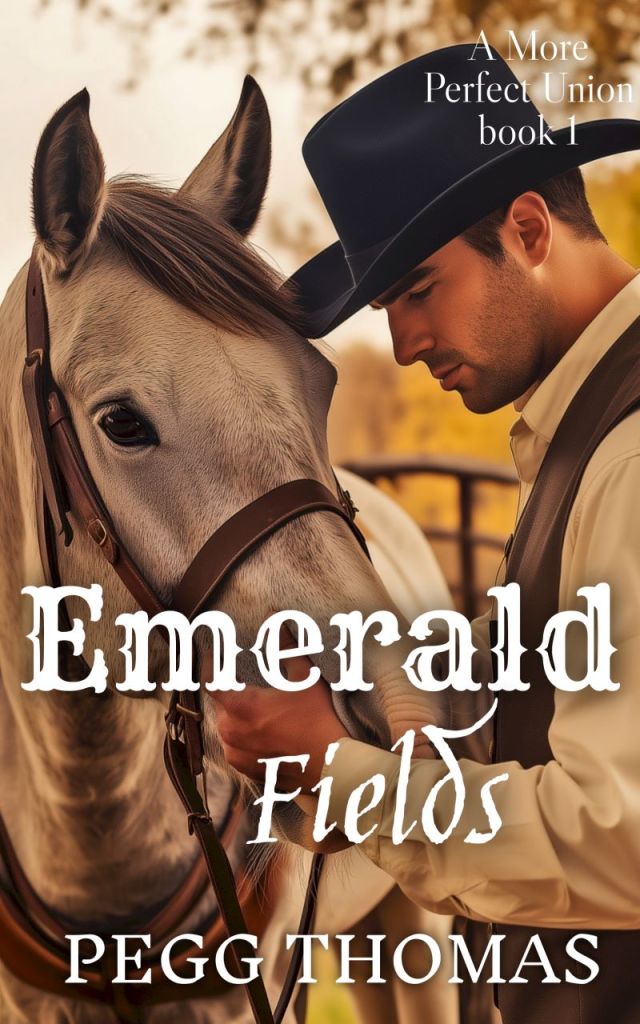
Heartbreak and hope—set against the backdrop of a war-torn country.
War has taken everything from Russ Fields – his brother, half of his face, and now his sister. But when he receives a reply to his letter of sorrow, he never imagined it would lead to something more.
Emmie Mason has also lost everything – her fiancé, her job, and her closest friend. But when she responds to a letter of condolence, she never expected it to bring a glimmer of hope.
As their letters continue, a bond forms between Russ and Emmie, two souls who have suffered unimaginable losses. But can their words bridge the gap between their harsh realities?
Don’t miss this emotional journey of two broken souls finding solace in each other’s words.
Tropes: Secret Identity – Hidden Identity – Epistolary Romance – Penpal Romance – Slow-Burn Romance – Wounded Hero – Strong but Vulnerable Heroine
Chapter 1
Pittsburgh, Pennsylvania, 1866
Emmie Mason scurried through the hallway clutching the familiar crisp envelope. She tossed her shawl onto the straight-backed chair outside the door to the music room on her way in. Evans would hang it up and chide her for it later, but that was a small price to pay for ending her anxiety.
Once inside her private haven, she eased the pocket door shut and collapsed into her favorite wing-backed chair next to the piano. The comfort of its burgundy brocade collected her like a mother’s hug, releasing the tension that had been building for days.
The letter was more than a week late, nearer two. Emmie had stopped by the post office every day after her shift at the hospital. Her friend had never been this tardy in writing, and Emmie’d feared something terrible had happened. But now, Becky’s letter lay on her lap and Emmie’s world was back in order. The familiar delicate swirls of her name on the envelope calmed her.
She lifted the carved wooden letter opener, a parting gift from Becky when they’d left school, and sliced through the top. She paused. No whiff of lilacs came from inside. She extracted a single sheet of ivory paper. A bold, jarring script she didn’t recognize scrawled across the page.
November 22, 1866 Dear Miss Mason, I regret to inform you of my sister’s passing this last Thursday, 15 November, 1866.
undefined
No! The letter fluttered to the floor. Pain sliced through Emmie’s middle even as her mind refused to hold onto the words. It wasn’t possible. Not Becky. Lively, musical, cheerful Becky who always knew what to say, what to share, to bring sunshine and light into Emmie’s life. It couldn’t be true. She picked up the envelope again. Becky’s fine script wavered before her eyes.
The page lay on the floor, its black scratchings running together in murky lines. Emmie retrieved it with a trembling hand, her other hand clenching the emerald pendant at her throat.
This will come as a shock to you, as it did to me. Becky contracted influenza only eight days before she passed. She implored that I write to you and send her sincerest regrets. Your friendship and letters meant as much to her as if you were family. I found this envelope already addressed, a testament to her devotion to you. It pains me to impart such news in this fashion, but I pray you find comfort in knowing that Becky’s final thoughts included you. Your servant, Russ Fields
undefined
As if she were family. Yes. That was exactly how it’d been between her and Becky from the first day at the Young Ladies Seminary of Pittsburgh. As if they were a part of each other, surely closer than real sisters, which Emmie’d never had. The paper creased in her fingers. She laid it on her lap and smoothed its edges.
Her trembling stopped, and something worse followed—an aching hollowness. She folded the sheet and slid it back into its envelope before rising and moving to the piano bench. The cool ivory met her fingertips and brought them to life. Music poured from her soul and filled the room, its pounding and minor chords expressing what she had no words to say—even if there’d been anyone to listen.
***
Snow slid from the barn roof in a blinding whoosh of icy particles that cascaded onto the shoulders of Russ Fields. He ducked into the building, grateful for the red wool muffler that kept the snow from getting under his coat. His sister had finished knitting it only days before the influenza struck. The ache in his chest, which never quite went away, deepened for a moment.
He wasn’t a stranger to loss—no one who had served in the war could be—but to lose Becky to something so senseless and so random … Most days Russ still struggled to put one foot in front of the other.
Goblin nickered in his stall. The scents of horse, manure, and damp sheep prompted Russ to get moving. If he didn’t have the farm chores to do, how would he have kept going? He grabbed the hayfork and pitched enough hay to fill the horse’s manger and more for the brown cow in the next stall. The noise drew the attention of those living in the barn’s basement. A cacophony of baas and grunts drifted through the seams between wooden floorboards.
“Just a moment.” Russ opened a door in the floor that contained a chute, and his black-and-white sheepdog poked his head into the opening.
“Move aside, Jigs.” Russ pitched down enough hay to stop the baaing, then he scooped a pail of corn from the bin along the wall and opened another chute door. The kernels pinged into a trough below, and the grunts became squeals of delight.
Sheep and pigs fed, he poured a measure of oats for Song before grabbing the three-legged stool and placing the milk bucket under her. She munched while the shping-shping of milk struck the metal bucket. The rhythmic motion allowed Russ’s mind to wander.
Had his letter reached Becky’s friend in Pittsburgh yet? He winced. What a terrible way to receive such news. Not that there was a good way. He leaned his forehead against Song’s shaggy flank. Guilt picked at him. Maybe he shouldn’t have read the bundle of letters Becky had saved. His sister wouldn’t have minded, he was sure. Her love for Emmie—he should think of her as Miss Mason, but couldn’t quite manage it after reading those letters—was obviously returned.
How was it that some people could meet and remain friends for life? He’d met so many men while serving as part of the 7th Michigan Cavalry during the war, yet he wrote to none of them. He might have written to Billy Kline had he lived. Billy and he had mustered in together shortly after the war began.
Russ’d joined the army to get away from the farm, away from the pain and loss. First Ma had succumbed to a cancer, and then his older brother, Frank, had fallen at the first Battle of Manassas. How misguided his thoughts seemed now. How he regretted leaving Pa and Becky by themselves like he had.
Song snorted and stomped her hoof narrowly missing the bucket. Russ gritted his teeth and relaxed his hands until the cow resumed her munching.
Billy had wanted to come home covered in the glory of battle and reunite with his sweetheart. Instead, he lay in the ground outside of Gettysburg. They’d been a team, him and Billy. After that battle, things had gone downhill for Russ.
Song swung her head.
“Sorry, girl.” He relaxed his grip again. “Almost done.” The doe-like eyes with long lashes winked at him. He finished and pulled the bucket out of the cow’s way. He stood and rubbed the scooped hollow between her eyes. “You miss Becky, don’t you? So do I, but we have to make the best of things now.”
The best of things. He had no idea what that meant. He rubbed the stiff, leathery scars on the left side of his face. If it were spring, he could burn off his sorrows planting corn and shearing the sheep. If it were summer, he’d be hoeing weeds and watering the garden. If it were fall, there’d be the harvest to bring in and wood to put up. But it was winter, and an early one at that. Snow on the ground so early meant a long season ahead.
He patted Goblin’s pale rump and pulled open the barn door. Snow blew past, almost obscuring the house only thirty yards away. He stepped into the swirling whiteness with Jigs at his heels.
How did one survive grief at a time like this?
***
“Emmie, you must eat something. It’s been—” Father turned his head and coughed, the deep wracking sound filling the formal dining room.
Emmie rose and came to his side and pressed a clean napkin into his hand, wishing she could breathe for him. “Breathe now, that’s it.”
Father’s wheezing meant the worst of the spasm was over, and Emmie’s chest eased along with his. They were getting worse, these spasms. She must be mindful not to vex him. That seemed to bring on the attacks. It was one of the things, anyway.
She’d seen enough men like this, other men who’d worked in the steel factories their entire lives, her friends’ fathers, brothers, uncles, and men at the hospital. Her father and brothers may have been safe from the war in their roles at the steel mills, but that didn’t mean they weren’t scarred by it. They carried their scars inside, deep in their lungs, from working extra shifts to keep the Union’s engines of war working.
Father patted her hand. “I’m all right now.” His hoarse voice and bluish lips said otherwise. “Eat your dinner, my dear.”
Emmie returned to her chair, the only one of the nine empty seats out of formation beside the long table. She lifted her crystal water goblet and took a sip. Then she sliced a piece of pink beef and chewed. It might as well have been coal dust in her mouth. Between her grief over Becky and worry over Father’s health, she only went through the motions of eating to please him.
“These things take the wind out of us for a while,” Father said, “but then it’s time to move on.”
If he insisted on talking about Becky’s death, without ever mentioning her beloved friend by name, Emmie wouldn’t be able to swallow another bite. She’d have to change the subject.
“What about Christmas?” She asked. “Are Archie and Richard coming with their families?”
He sat back in his chair and dabbed his lips with a napkin. “Archie thinks it’s time one of them hosted the family gathering.” He lifted one shoulder in a half-shrug. “He worries about the hubbub being too much for me.”
In that, she might agree with her eldest brother. Father’s spasms were draining the life out of him. He loved his grandchildren, but they were a boisterous group on the best of days, and all eight together could be a handful.
If James hadn’t died in battle at Cold Harbor, she might have been married by now and have added to Father’s passel of grandchildren, maybe even with a second one on the way. She pressed her hand to her stomach. James had been determined to fight. He’d said he’d rather die in battle than have his breath squeezed out of him working the mills.
Father coughed again.
Maybe James had been right. Even though Father had risen through the ranks to become an influential part of the management in the mills, his early years working steel had taken their toll. Not even the cheerful flicking of the candles in their silver holders could liven up his gray face.
Emmie cut another piece of beef and chewed, her mind drifting to where it best liked to wander, over the fields of Becky’s farm. Her friend’s letters had brought the place to life with its colors and scents and sounds. They were sprinkled with the antics of a gray horse, a brown cow, a flock of wooly white sheep, a sty full of pigs, and a black-and-white dog. Compared to the gray skies and gray streets of Pittsburgh, Becky’d made the farm in Jonesville, Michigan, seem like heaven on earth.
Emmie’s dream of seeing it for herself melted like the butter puddled on her untouched mashed potatoes.
Yet, there was someone still there—Becky’s brother. Would he welcome a return letter from her? Nothing lengthy, just an acknowledgment that she’d received his. She stopped mid-chew. It truly was the least she could do to express her sympathies to him. Yes. She scooped up a bite of the potatoes. She would write Mr. Fields that very evening.
Why hadn’t she thought to do so before?
***
Before Becky had taken ill, she’d often run the errands in town for Russ, saving him the emotional turmoil those trips to town caused. He pulled his wide-brimmed hat lower on his forehead and tugged his muffler around his chin, then gave the reins a little slap over Goblin’s rump.
“Move on. The sooner we get there, the sooner we can get back home.”
Goblin tossed his head and picked up his feet, his shoes digging through the snow to grip the frozen lane underneath. The harness jingled, and the wagon’s wheels creaked in the cold. He should grease those axles again.
The town was dressed for Christmas with greenery and red bows in almost every window. Even the blacksmith shop had a rope twisted with holly vines strung over its door. Russ dropped off a broken gate hinge for repairs. Then he stopped at the general store, the familiar scents of lye soap and oiled leather greeting him at the door. He gave the clerk his list and was looking at a pair of boots when the bell above the door jingled. Three ladies entered. By reflex, Russ tucked his chin to his left and tilted that side of his face away from them. Not for the first time, he wished his scarred skin would grow whiskers to hide at least the bottom half of his face. Or that he could wear a patch over his missing eye, but the lumpy scar tissue made it too uncomfortable.
The women took a while to choose their purchases, but he waited more or less patiently until they left, then approached the counter.
“That’s your wagon out front with the gray hitched to it, isn’t it?” the young clerk asked, eyes shifting away from Russ’s scarred face.
“It is.”
“I’ll have you loaded in a jiffy.”
Back on the wagon, Russ almost passed the post office. Seemed a waste of time to enter with Becky being gone. Wasn’t likely anyone would write to him except for his older sister, Cilla. Even so, he pulled Goblin to a stop and went in.
“Afternoon, Mr. Fields.” Mrs. Russell, who worked as postmistress, bobbed her white head at him. “You’re here for your mail, I suppose.”
Why else did anyone come into the post office? But she asked the same question to everyone, so it was silly to be annoyed. At least she looked at him—without flinching—as she asked. She’d lost her youngest son in the war. When Russ had returned, she’d told him that she’d have given anything to have her boy back, no matter what shape he’d come home in. Maybe that was the real reason he’d stopped today, so that at least one person would look at him for who he was and not how he looked.
“Yes, ma’am. But I don’t know if there’ll be much mail now that…” He let his words trail off.
“Miss Becky was a letter writer, no doubt about it, but I do believe you have one today.” She fished her fingers into a slot behind her. “Yes. I thought I remembered seeing it come in. It looks the same as those envelopes your sister used to get so regular.” The old lady beamed up at him, her round eyes, narrow nose, and tilted head bearing an uncanny resemblance to a bird.
“Thank you, ma’am.” The envelope was the same type he’d opened and read from Becky’s collection. He tucked it in his inside coat pocket, touched his hat brim, and backed out of the building before the old lady could ask the question he couldn’t answer.
Why would Becky’s friend write to him?
He climbed onto the wagon and chirped to Goblin, who, as usual, was more agreeable to picking up his feet on the return trip home. They rolled past the frozen countryside, up and down the gentle swells of the landscape until they reached the lane to his farm.
His. No longer his and Becky’s. He should have swung by the cemetery before he left town, but that meant getting close to the church. He wasn’t ready for that.
With the purchases unloaded and Goblin cared for, Russ ran out of reasons to keep moving. He tapped the front of his coat. The envelope crackled against his shirt.
It was time to face what Becky’s friend had to say.or fear.
paperback ISBN: 979-8-9850278-6-0 – ebook ISBN: 979-8-9850278-7-7- audiobook ASIN: B0DX5MH3DV
Return to https://peggthomas.com/
 Pegg Thomas